Missouri's Leading Negligent Security Lawyers
Holding property owners accountable when inadequate security leads to violent crime. These attorneys represent victims of shootings, assaults, robberies, and other crimes caused by negligent property owners across Missouri.
What Is Negligent Security?
Negligent security is a form of premises liability where a property owner or manager fails to provide adequate security measures, and a visitor, tenant, or customer is injured as a result of criminal activity on the property. Under Missouri law, businesses and property owners have a legal duty to protect people on their premises from foreseeable criminal acts.
When a gas station, apartment complex, hotel, parking lot, bar, or other commercial property has a history of crime -or is located in a high-crime area -the owner is expected to implement reasonable security measures. Failing to do so can make the property owner civilly liable for injuries that occur, separate from any criminal charges against the attacker.
You May Have a Negligent Security Claim If:
- 1 You were the victim of a crime (shooting, assault, robbery, sexual assault) on someone else's property
- 2 The property had a history of criminal activity or was in a known high-crime area
- 3 Security measures were absent or inadequate (no cameras, broken lighting, no guards, no access control)
- 4 You suffered physical injuries, emotional trauma, or a loved one was killed
- 5 The property owner knew or should have known about the security risks but failed to act
Could You Have a Negligent
Security Claim?
Six questions. Two minutes. Real answers.
Where did the incident happen?
This assessment is for informational purposes only and does not constitute legal advice.
Confidential. Free. Missouri-focused.
Featured Negligent Security Attorneys
These experienced Missouri trial attorneys bring decades of combined experience in premises liability and negligent security litigation. Each attorney holds a Martindale-Hubbell AV Preeminent peer review rating -the highest rating for professional excellence.

Chris Faiella
Member, Gump, Faiella & Bugalski, LLC
Mr. Faiella has recovered more than $300 million in compensation for his clients over the course of his career. He focuses on personal injury, wrongful death, and insurance cases, including automobile collisions, truck accidents, defective products, insurance coverage disputes, agent negligence, insurance bad faith, sports and recreational injuries, civil rights, and class actions.
Mr. Faiella has authored a book on settlements and book chapters on trial practice in personal injury and products liability cases. He brings both litigation skill and deep legal scholarship to every case.
Education
- J.D., University of Missouri, Columbia School of Law
- B.A., State University of New York
Bar Admissions
- Missouri
- U.S. Supreme Court
- U.S. Tenth Circuit Court of Appeals
- U.S. District Courts, W.D. & E.D. Missouri
Professional Memberships
- MATA -Board of Governors
- American Association for Justice
- Missouri Bar -Tort Law Committee
Offices
- Moberly, MO
- Columbia, MO

Dan Mizell
Owner & Manager, Deputy & Mizell, L.L.C.
Mr. Mizell has built his practice around fighting for victims of serious accidents throughout Missouri. He focuses on personal injury, workers' compensation, and wrongful death cases, including automobile accidents, truck accidents, boating accidents, slip and fall claims, and workers' compensation matters.
A lifelong Missouri resident, Mr. Mizell earned his J.D. from the University of Missouri School of Law, where he was recognized with the Order of the Barristers, the R. David Ray Award for Trial Advocacy, and the Roscoe Anderson Award for Excellence in Moot Court -- honors reflecting his exceptional courtroom abilities.
He is a member of the Missouri Bar Association, the Laclede County Bar Association, and a Fellow of the Missouri Bar Foundation. Mr. Mizell brings both proven trial skill and a deep commitment to his community to every case he handles.
Education
- J.D., University of Missouri School of Law
- B.S. Finance, University of Missouri, Columbia
Awards & Honors
- Order of the Barristers
- R. David Ray Award for Trial Advocacy
- Missouri Bar Foundation Fellow
Professional Memberships
- Missouri Association of Trial Attorneys
- Missouri Bar
- Laclede County Bar Association
Offices
- Lebanon, MO (Main Office)
- Camdenton, MO
Verdicts & Settlements
A track record of securing substantial compensation for crime victims and their families.
Combined Results Across All Featured Attorneys
Chris Faiella - Over $300M in career recoveries
$1,000,000
Shooting Wrongful Death
Settlement
Seven Figures
Shooting Wrongful Death
Confidential Settlement
$800,000
Civil Rights Violation
Settlement
$350,000
Civil Rights Violation
Settlement
$250,000
Negligent Security, Personal Injury
Settlement
$100,000
Negligent Security, Personal Injury
Settlement
Confidential
Negligent Security, Bar Fight
Confidential Settlement
Seven Figures
Involuntary Manslaughter, Denial of Insurance Coverage to Shooter/Bar
Confidential Settlement
Confidential
Negligent Security, Involuntary Manslaughter, Denial of Insurance Coverage to Bar
Confidential Settlement
Dan Mizell - Over $29M in notable verdicts & settlements
$10,000,000
Wrongful Death, Hotel Chain
Date and venue confidential
$5,000,000
Fall Off Retaining Wall, Amputation
Jefferson City
$3,000,000
Manufacturing Defect
Date and venue confidential
$2,875,000
Sexual Assault, School District
School of the Osage School District
$2,250,000
Ceiling Collapse at Restaurant
Springfield
$1,730,000
Automobile Accident
Camden County
$1,500,000
Boating Accident
Lake of the Ozarks
$1,250,000
Diving Accident
Lake of the Ozarks
$875,000
Medical Malpractice
Jefferson City
$500,000
Dog Bite Accident, Facial Scarring
Settlement
Past results do not guarantee future outcomes. Each case is unique. Confidential settlements are not disclosed by amount per court agreement.
Injured Due to Negligent Security?
Find out if you have a case. Free, confidential consultation with no obligation.
Types of Negligent Security Cases
Negligent security claims arise across every type of commercial property where inadequate security contributes to injuries from violent crime.

Gas Stations & Convenience Stores
24-hour operations, cash handling, and isolated locations create security responsibilities. Property owners must address foreseeable risks including robbery and assault.
Expected Security Measures:
- Adequate lighting
- Working surveillance cameras
- Security personnel during high-risk hours
- Safe cash handling procedures

Apartments & Housing Complexes
Landlords have ongoing duties to maintain security in common areas. Gates, locks, lighting, and screening processes all factor into tenant safety.
Expected Security Measures:
- Functioning locks and gates
- Lit parking areas and walkways
- Security cameras in common areas
- Tenant screening procedures

Hotels & Motels
Guest safety is a fundamental responsibility. From door locks to staff training, hotels must protect visitors from foreseeable criminal acts.
Expected Security Measures:
- Secure room locks and deadbolts
- Key card access systems
- Staff security training
- Surveillance in public areas

Parking Lots & Garages
Isolation and limited visibility make parking areas high-risk. Owners must provide adequate lighting, cameras, and security presence.
Expected Security Measures:
- Bright, consistent lighting
- Working surveillance systems
- Emergency call stations
- Security patrols
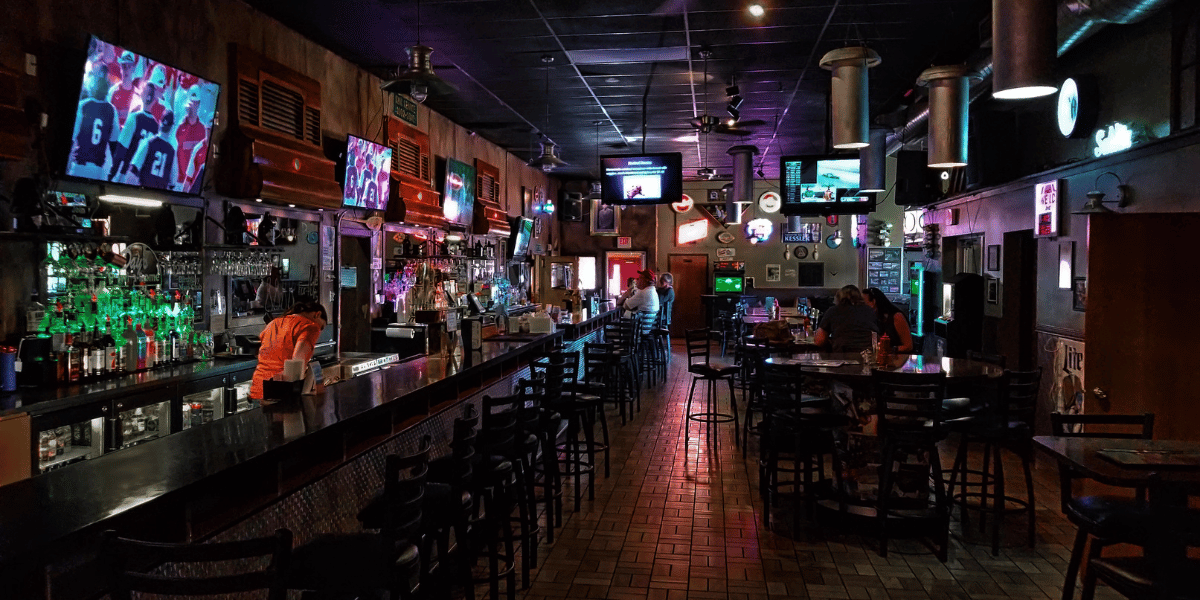
Bars & Nightclubs
Alcohol service creates heightened duties. Crowd management, security staffing, and intervention protocols are essential for patron safety.
Expected Security Measures:
- Trained security personnel
- Crowd capacity management
- Proper ejection procedures
- Incident response protocols

Other Commercial Properties
Retail stores, shopping centers, casinos, event venues, and any other commercial property where negligent security contributed to a crime.
Expected Security Measures:
- Surveillance camera coverage
- Adequate lighting throughout
- On-site security personnel
- Emergency action plans
Data-Driven Tools
Crime Data & Security Standards by Property Type
Select a property type to see real Missouri crime statistics and the security measures that should have been in place. This is the data attorneys use to prove foreseeability and establish property owner negligence.
Parking Lot / Garage
Missouri violent crime data, 2020–2024 (FBI Crime Data Explorer)
Required Security Measures
Industry standards this property type should have met
If the property where you were injured was missing any of these security measures, you may have a negligent security claim.
Where Are Commercial Property Crimes Most Foreseeable?
Five years of Missouri crime data reveals which property types have the highest rates of violent crime, establishing clear patterns of foreseeability for negligent security cases.
Top 5 Most Dangerous Commercial Property Types
Key Finding: Parking facilities account for 30% of all violent crimes at commercial properties, making them the single most foreseeable high-risk location for premises liability claims.
Data source: FBI's Crime Data Explorer
Explore the Complete Interactive Analysis
See detailed breakdowns by crime type, property rankings, and security failure patterns. Build your case with data-driven evidence that establishes foreseeability and property owner liability.
View Full Interactive Data DashboardHow Negligent Security Applies to Each Crime Type
Every crime type involves different security failures and evidence. Select a crime type below to understand how negligent security law applies.
Shooting
Shooting
How Negligent Security Applies
Shootings at commercial properties often result from a combination of inadequate lighting, lack of surveillance cameras, absent security personnel, and failure to address known crime patterns. When a property owner knows -or should know -that their location is at risk for gun violence and fails to implement reasonable security measures, they may be liable for injuries and deaths that result.
Key Evidence to Preserve
- Surveillance footage (often deleted within 30-90 days)
- Police reports and crime scene documentation
- Prior incident reports or police calls to the location
- Photos of the scene showing lighting conditions and security equipment
- Witness statements from employees and bystanders
Common Property Security Failures
- No working security cameras or cameras pointed in wrong directions
- Inadequate or broken exterior lighting in parking areas
- No security guard despite history of violent incidents
- Failure to install bullet-resistant barriers in high-risk businesses
Stabbing
Stabbing
How Negligent Security Applies
Stabbings frequently occur in convenience stores, gas stations, and commercial properties where altercations escalate due to the absence of security personnel or staff training. Property owners who fail to provide adequate staffing, lighting, and access control in areas with known violent crime histories may bear liability for stabbing injuries and deaths.
Key Evidence to Preserve
- Store surveillance and exterior camera footage
- Employee schedules and staffing records for the shift
- Records of prior violent incidents or disturbances
- Medical records documenting the severity of injuries
Common Property Security Failures
- No security guard during late-night or high-risk hours
- Lack of employee de-escalation training
- No panic buttons or emergency alert systems
- Poorly designed store layout limiting visibility and escape routes
Related Cases on Our Site
Physical Assault
Physical Assault
How Negligent Security Applies
Assaults on commercial properties -including parking lots, bars, apartment common areas, and retail stores -are among the most common negligent security claims. When a property has a history of fights, disturbances, or violent confrontations and the owner fails to implement adequate security measures, they may be held responsible for the resulting injuries.
Key Evidence to Preserve
- Security camera recordings from the property and nearby businesses
- Police call history for the property (available via records request)
- Medical records and photographs of injuries
- Witness statements from patrons, employees, or bystanders
Common Property Security Failures
- No security personnel at venues with known history of altercations
- Insufficient lighting in parking lots, stairwells, and common areas
- Failure to monitor and respond to disturbances
- No policy for handling intoxicated or aggressive patrons
Sexual Assault
Sexual Assault
How Negligent Security Applies
Sexual assaults are frequently enabled by specific security failures -broken locks on hotel rooms, unmonitored stairwells in apartment complexes, dark and isolated parking areas, and lack of access control that allows unauthorized individuals onto the property. Hotels, motels, and apartment complexes have a heightened duty to protect residents and guests, especially in areas where they are most vulnerable.
Key Evidence to Preserve
- Door lock and access control records or maintenance logs
- Hallway, elevator, and parking area surveillance footage
- Guest or tenant complaints about security issues
- Records of prior incidents involving unauthorized entry
Common Property Security Failures
- Broken or non-functioning door locks, deadbolts, or window latches
- No access control -exterior doors propped open or unlocked
- Unlit or poorly lit hallways, stairwells, and parking areas
- Failure to screen or monitor who enters the property
Related Resources
Robbery / Armed Robbery
Robbery / Armed Robbery
How Negligent Security Applies
Robberies at gas stations, convenience stores, ATM locations, parking lots, and shopping centers are often predictable based on prior crime history and well-known risk factors. When property owners fail to implement basic deterrents -visible cameras, adequate lighting, security personnel during high-risk hours -and a robbery results in injury, the property owner may share liability for the harm caused.
Key Evidence to Preserve
- Security camera footage from the property and surrounding area
- Cash handling policies and procedures
- Prior robbery or theft reports at the location
- Police crime data for the surrounding area
Common Property Security Failures
- No visible security cameras (deterrent effect is critical)
- Single employee working late-night shifts alone
- No drop-safe or cash management procedures
- Obstructed windows (signage, displays) limiting visibility from the street
Related Cases on Our Site
Why Hire a Negligent Security Lawyer?
Negligent security cases are complex. An experienced attorney can make the difference between a dismissed claim and maximum compensation.
Proving Foreseeability
The single most important element in a negligent security case is proving the crime was foreseeable. Your attorney will investigate the property's crime history, obtain police reports, analyze 911 call records, and build a compelling case that the owner knew -or should have known -about the danger.
Security Expert Testimony
Experienced negligent security attorneys work with qualified security experts who evaluate the property's security measures against industry standards and testify about what specific measures should have been in place to prevent the crime.
Investigating Prior Crimes
Through the legal discovery process, your attorney can compel property owners to produce internal records, incident reports, complaints, and security assessments that the public would never otherwise see. This evidence is critical to building your case.
Maximizing Your Compensation
Property owners and their insurance companies employ experienced defense teams to minimize payouts. Your attorney ensures every element of your damages is documented and pursued, from immediate medical costs to long-term emotional trauma and lost earning capacity.
No Upfront Cost -Contingency Fee
The attorneys featured here work on a contingency fee basis. You pay nothing upfront, and there are no attorney fees unless compensation is recovered. This means every victim has access to experienced legal representation regardless of financial situation. The initial consultation is always free and confidential.
Don't Wait to Protect Your Rights
Critical evidence like surveillance footage can be lost within 30-90 days. Act now.
How Security Experts Evaluate Your Case
Security expert witnesses play a critical role in negligent security cases. Their analysis establishes whether the property owner provided reasonable security -or failed to.
What They Evaluate
- Surveillance camera placement, condition, and coverage
- Exterior and interior lighting levels (measured in foot-candles)
- Access control systems -locks, key cards, gates, fencing
- Security staffing levels relative to property size and risk
- Crime history analysis and foreseeability assessment
How They Testify
- Written expert reports detailing security deficiencies
- Deposition testimony explaining their findings under oath
- Trial testimony comparing the property's security to industry standards
- Visual exhibits -annotated site photos, lighting diagrams, security assessments
Why Their Analysis Matters
- Establishes the "standard of care" -what security should have been in place
- Identifies the gap between adequate and actual security measures
- Proves the crime was preventable with reasonable security
- References industry standards (ASIS International, CPTED principles) that courts recognize
Industry Standards vs. Actual Security: The core of expert testimony is comparing what security measures should have been in place -based on the property type, location, and crime history -against what was actually in place. The gap between the two is the foundation of your negligent security claim.
How a Negligent Security Case Is Built
From the first phone call to resolution, here is what an experienced negligent security attorney does at each stage of your claim.
Free Case Evaluation
The attorney reviews your situation, explains your legal options, and determines whether you have a viable negligent security claim. This consultation is completely free and confidential.
Investigation & Evidence Gathering
The legal team obtains police reports, surveillance footage, 911 call records, the property's crime history, and any prior complaints. Speed is critical because evidence like security camera footage can be overwritten in 30–90 days.
Security Expert Analysis
Qualified security experts evaluate the property's measures against industry standards and identify specific failures that contributed to the crime. Their testimony is critical in establishing what the property owner should have done.
Building Your Claim
Your attorney documents the full scope of damages -medical expenses, lost income, pain and suffering, emotional trauma -and builds a comprehensive case demonstrating the property owner's negligence and your entitled compensation.
Negotiation or Trial
Your attorney negotiates aggressively with the property owner's insurance company for a fair settlement. If a just offer is not made, these attorneys are experienced trial lawyers prepared to take your case to a jury.
Missouri Negligent Security Law
Missouri's Business Premises Safety Act (RSMo 537.787) establishes the legal framework for negligent security claims. Under this statute, businesses have a duty to protect visitors from criminal acts when the business knows or has reason to know that criminal activity is being committed or is reasonably likely to occur on the premises.
The statute also provides an affirmative defense for businesses that have implemented "reasonable security measures." The central question in most negligent security cases is whether the security measures in place were reasonable given the specific risks at that location.
Duty of Care
Property owners owe a duty of reasonable care to protect people on their premises from foreseeable criminal acts. This duty is heightened when the property has a known history of criminal activity.
Foreseeability
The key question is whether the crime was foreseeable. Prior crimes at the location, the property's position in a high-crime area, and industry knowledge about crime risks all contribute to foreseeability.
Statute of Limitations
Personal injury claims must be filed within 5 years in Missouri. Wrongful death claims have a 3-year deadline. Acting quickly is critical to preserve evidence.
Comparative Fault
Missouri uses a pure comparative fault system. Even if you are found partially at fault, you can still recover damages reduced by your percentage of fault.
Missouri Negligent Security Case Law
Missouri courts have established important precedents defining when property owners are liable for criminal acts on their premises.
The Foreseeability Standard
[Citation -Attorney to Supply: Missouri appellate decision on foreseeability of criminal acts on premises]
Missouri courts have held that a property owner's duty to protect against criminal acts arises when the criminal activity was reasonably foreseeable. Foreseeability can be established through evidence of prior similar crimes at the location, the property's position in a high-crime area, or the nature of the business making certain crimes predictable. Courts apply a "totality of the circumstances" approach rather than requiring identical prior incidents.
Duty Regarding Third-Party Criminal Acts
[Citation -Attorney to Supply: Missouri decision on property owner duty to protect against third-party criminal acts]
While property owners are generally not insurers of visitor safety, Missouri courts recognize that business owners who invite the public onto their property owe a duty of reasonable care to protect against foreseeable criminal acts by third parties. This duty is heightened when the property has a documented history of criminal activity or is located in an area with elevated crime rates.
The "Reasonable Security Measures" Defense
RSMo § 537.787 -Missouri Business Premises Safety Act
Under Missouri's Business Premises Safety Act (RSMo 537.787), businesses have an affirmative defense if they can demonstrate that "reasonable security measures" were in place. Courts evaluate what is "reasonable" based on the property type, its crime history, the surrounding area, industry standards, and the specific risks the property faces. Simply having cameras that don't work or lights that are burned out does not satisfy this standard.
Comparative Fault in Security Cases
[Citation -Attorney to Supply: Missouri decision on comparative fault in premises liability/security cases]
Missouri's pure comparative fault system means that even if a victim is found partially at fault, they can still recover damages -reduced by their percentage of fault. In negligent security cases, property owners frequently argue that the victim's own actions contributed to their injuries. However, Missouri courts have recognized that a crime victim's presence at a location does not constitute contributory negligence when the property owner failed to provide adequate security.
Case law summaries describe general legal principles established by Missouri courts. Consult an attorney for how these precedents apply to your specific situation.
Serving Crime Victims Across Missouri
With offices in Moberly, Columbia, Lebanon, and Camdenton, these attorneys provide statewide coverage for negligent security victims throughout Missouri.
Gump, Faiella & Bugalski, LLC
Chris Faiella
Moberly, MO
North Central Missouri
Columbia, MO
Central Missouri
Serving clients across Northern & Central Missouri, including Kansas City and surrounding areas
Deputy & Mizell, L.L.C.
Dan Mizell
Lebanon, MO
Southern Missouri (Main Office)
Camdenton, MO
Lake of the Ozarks
Serving clients across Southern Missouri, the Lake of the Ozarks region, Springfield, and surrounding areas
These attorneys serve clients statewide across Missouri. No matter where in the state the injury occurred, representation is available. Combined, their offices provide coverage from Kansas City to the Lake of the Ozarks and everywhere in between.
Your Rights as a Crime Victim in Missouri
A quick reference for Missouri crime victims considering a negligent security claim.
Right to Pursue Civil Action
You can file a civil lawsuit against the property owner regardless of whether the criminal is caught, charged, or convicted. The civil case is completely separate from any criminal prosecution -and the burden of proof is lower.
Statute of Limitations
Personal injury claims: 5 years from the date of injury. Wrongful death claims: 3 years from the date of death. Do not wait -surveillance footage can be deleted within 30-90 days. Learn more about time limits.
Comparative Fault
Missouri uses pure comparative fault. Even if you are found partially at fault, you can still recover damages reduced by your percentage of fault. This is more favorable to victims than many other states. Understand comparative fault.
No Upfront Cost
Negligent security attorneys work on contingency -you pay nothing unless compensation is recovered. The initial consultation is free and confidential. There is no financial risk to exploring your legal options.
What NOT to Do After Being a Crime Victim
- × Do NOT sign anything from the property owner's insurance company without legal counsel
- × Do NOT give a recorded statement to the property's insurer -it can be used against you
- × Do NOT accept a quick settlement offer -early offers are almost always far below what your case is worth
- × Do NOT wait too long -critical evidence like surveillance footage disappears quickly, and deadlines are firm
Frequently Asked Questions
Common questions about negligent security claims in Missouri.
What is negligent security?
Negligent security is a type of premises liability claim where a property owner fails to provide adequate security measures, and someone is injured as a result of criminal activity on the property. If a business or landlord knew or should have known about security risks -such as prior crimes at the location -and failed to take reasonable steps to prevent harm, they may be held legally responsible for injuries that occur.
How do I know if I have a negligent security case?
You may have a negligent security case if you were the victim of a crime on someone else's property and the property owner failed to provide reasonable security. Key factors include: the property had a history of criminal activity, the crime was foreseeable based on the location or prior incidents, security measures were absent or inadequate (broken cameras, no lighting, no guards), and you suffered injuries as a result. A free consultation with a negligent security attorney can help evaluate your specific situation.
What compensation can I recover in a negligent security lawsuit?
Victims of negligent security may recover compensation for medical expenses (past and future), lost wages and earning capacity, pain and suffering, emotional distress and PTSD treatment, loss of enjoyment of life, and in wrongful death cases, funeral costs and loss of companionship. In cases of particularly egregious negligence, punitive damages may also be available.
How much does a negligent security lawyer cost?
The negligent security attorneys featured here work on a contingency fee basis, meaning there are no upfront costs and no fees unless the case is won. The attorney's fee is a percentage of the recovery, so the client never pays out of pocket. The initial consultation is always free and confidential.
How long do I have to file a negligent security lawsuit in Missouri?
In Missouri, the statute of limitations for personal injury claims, including negligent security, is 5 years from the date of injury. For wrongful death claims, the statute is 3 years from the date of death. However, it is critical to act quickly because evidence such as surveillance footage is often overwritten within 30-90 days, and witness memories fade over time.
Can I sue if the person who attacked me was never caught?
Yes. A negligent security lawsuit is a civil claim against the property owner for failing to provide adequate security -it is completely separate from any criminal case against your attacker. You do not need to know the identity of your attacker or wait for a criminal conviction to pursue your civil claim against the property owner.
What evidence do I need for a negligent security claim?
Key evidence includes: police reports from your incident, the property's history of prior crimes and 911 calls, surveillance footage (or proof that cameras were not functioning), documentation of security measures that were present or absent, photographs of the scene (lighting, access points, signage), witness statements, and expert testimony from security professionals. Your attorney will handle gathering and preserving this evidence.
What security measures should property owners provide?
The level of security required depends on the type of property and its crime history. Common measures include adequate lighting, working surveillance cameras, security personnel, controlled access points, alarm systems, and employee training. Properties in high-crime areas or with a history of violent incidents are expected to implement enhanced security measures beyond what might be required in lower-risk locations.
Have More Questions?
Speak directly with an experienced negligent security attorney. No cost, no obligation.
Civil Lawsuit vs. Criminal Case
Your civil negligent security claim is completely separate from any criminal prosecution. Here is how they differ.
| Aspect | Criminal Case | Civil Lawsuit |
|---|---|---|
| Who brings it | State / prosecutor | You (the victim) |
| Against whom | The criminal offender | The property owner |
| Goal | Punish the offender | Compensate the victim |
| Burden of proof | Beyond reasonable doubt | Preponderance of evidence (lower) |
| Your role | Witness | Plaintiff -you control the case |
| Outcome | Jail / prison / probation | Financial compensation |
| Cost to you | None (state pays) | No upfront cost (contingency fee) |
Recent Negligent Security Cases in Missouri
Real cases highlighting the consequences of inadequate security at Missouri properties.
Mother Sues Power 66 Gas Station After Son Killed During West Bottoms Robbery
Wrongful death lawsuit filed against gas station with dozens of documented prior violent incidents spanning over a decade.
Read Full Analysis → Fast Food RestaurantKansas City Popeyes Shooting Kills Innocent DoorDash Driver
Innocent bystander fatally shot while picking up a DoorDash order at a Popeyes on Prospect Avenue, one of Kansas City's highest-crime corridors.
Read Full Analysis →Get Your Free Case Evaluation
Complete the form for a free case evaluation from a crime victim attorney. Our consultation is completely confidential, and there's no obligation.